-->
Showing posts with label Tessa. Show all posts

Wednesday, April 25, 2012

Teething


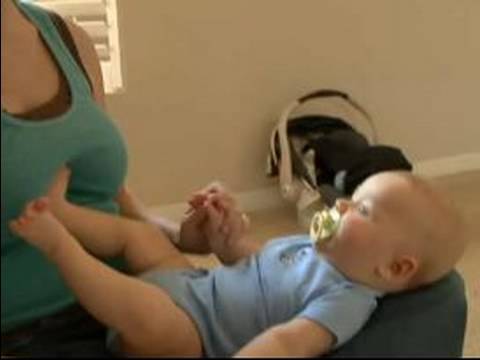
Teething usually starts between months four and seven. The two front teeth (central incisors), either upper or lower, usually appear first, followed by the opposite front teeth. The first molars come in next, followed by the canines or eyeteeth.
There is great variability in the timing of teething. If your child doesn’t show any teeth until later than this age period, don’t worry. The timing may be determined by heredity, and it doesn’t mean that anything is wrong.
Teething occasionally may cause mild irritability, crying, a low-grade temperature (but not over 101 degrees Fahrenheit or 38.3 degrees Celsius), excessive drooling, and a desire to chew on something hard. More often, the gums around the new teeth will swell and be tender. To ease your baby’s discomfort, try gently rubbing or massaging the gums with one of your fingers. Teething rings are helpful, too, but they should be made of firm rubber. (The teethers that you freeze tend to get too hard and can cause more harm than good.) Pain relievers and medications that you rub on the gums are not necessary or useful since they wash out of the baby’s mouth within minutes. Some medication you rub on your child’s gums can even be harmful if too much is used and the child swallows an excessive amount. If your child seems particularly miserable or has a fever higher than 101 degrees Fahrenheit (38.3 degrees Celsius), it’s probably not because she’s teething, and you should consult your pediatrician.
Tips to comfort your baby:
  • If you decide to try some medication, always check with your pediatrician first. This includes any over-the-counter pain relievers such as Tylenol or Motrin. Also, check with your pediatrician before using any topical, pain-relieving gels, but beware, the pain relief doesn’t last very long and some children dislike the numbing effect just as much as the teething pain.  One other option for medication is homeopathic teething tablets. These seem to be a popular form of pain relief used by many mothers. Again, please check with your doctor before using any type of medicine.
  • Pressure to the gums seems to be most babies’ treatment of choice. As a parent, you can probably do the job a little better with a clean finger of your own. Are you brave enough to stick your finger in there? If you are, then massaging the gums will help most babies to relax. It might take a few gentle but firm rubs before your child can actually enjoy the gum massage you are providing. It will be a little painful at first but the pressure will soon help to ease the pain. If your child really seems to dislike it, then move on to something else. 
  • Some children will prefer something harder to chomp down on to help relieve pressure. It’s even better if that something is cold. Do not give your child frozen bagels, hard vegetables, like carrots, or any other solid, frozen food item. These things are choking hazards and could be very dangerous if a piece breaks off in your child’s mouth. Stick with actual teething rings made for this purpose. You can put them in the refrigerator or in the freezer. If you have put a water-filled ring in the freezer and it has frozen solid, running it under some water before giving it to your child can soften it up slightly. This is good for the younger babies whose gums are still a little delicate. 
  • If your child seems to prefer the softer items to chew on, you can wet a washcloth and put it in the freezer. Put a few of them in at once. This way, when the one he’s been chewing on is no longer cold, you’ll already have another one standing by. If you’re not opposed to your child having a pacifier, or if he already uses one, you can also keep a couple of these in the freezer. Keep a close watch on any pacifiers your child has been chewing on. If you notice any breakage or loosening of the parts, throw it away. Do not give a damaged pacifier to your child.
  • Get advice from your pediatrician if these tips don't work for you and your baby.
Teething Tips found here
How should you clean the new teeth? Simply brush them with a soft child’s toothbrush when you first start seeing her teeth. To prevent cavities, never let your baby fall asleep with a bottle, either at nap time or at night. By avoiding this situation, you’ll keep milk from pooling around the teeth and creating a breeding ground for decay.
Information found here
baby toothbrush 200x300 baby toothbrushPhoto

Monday, April 23, 2012

Safe Sleep Practices


Did You Know?

  • About one in five sudden infant death syndrome (SIDS) deaths occur while an infant is in the care of someone other than a parent. Many of these deaths occur when babies who are used to sleeping on their backs at home are then placed to sleep on their tummies by another caregiver. We call this “unaccustomed tummy sleeping.”
  • Unaccustomed tummy sleeping increases the risk of SIDS. Babies who are used to sleeping on their backs and are placed to sleep on their tummies are 18 times more likely to die from SIDS.
You can reduce your baby’s risk of dying of SIDS by talking to those who care for your baby, including child care providers, babysitters, family, and friends, about placing your baby to sleep on his back at night and during naps.

Who Is At Risk For SIDS?

  • SIDS is the leading cause of death for infants between 1 month and 12 months of age.
  • SIDS is most common among infants that are 2-4 months old. However, babies can die of SIDS until they are 1 year old.

What Can I Do Before My Baby Is Born To Reduce The Risk of SIDS?

Take care of yourself during pregnancy and after the birth of your baby. During pregnancy, before you even give birth, you can reduce the risk of your baby dying from SIDS! Don’t smoke or expose yourself to others’ smoke while you are pregnant and after the baby is born. Be sure to visit a physician for regular prenatal checkups to reduce your risk of having a low birth weight or premature baby. Breastfeed your baby, if possible, at least through the first year of life.

Know The Truth…SIDS Is Not Caused By:

  • Immunizations
  • Vomiting or choking
Where Is The Safest Place For My Baby To Sleep?
The safest place for your baby to sleep is in the room where you sleep. Place the baby’s crib or bassinet near your bed (within an arm’s reach). This makes it easier to breastfeed and to bond with your baby.
The crib or bassinet should be free from toys, soft bedding, blankets, and pillows.

How Can I Reduce My Baby’s Risk?

Follow these guidelines to help you reduce your baby’s risk of dying from SIDS.

Safe Sleep Practices

  • Always place babies to sleep on their backs during naps and at nighttime. Because babies sleeping on their sides are more likely to accidentally roll onto their stomach, the side position is not as safe as the back and is not recommended.
  • Don’t cover the heads of babies with a blanket or over-bundle them in clothing and blankets.
  • Avoid letting the baby get too hot. The baby could be too hot if you notice sweating, damp hair, flushed cheeks, heat rash, and rapid breathing. Dress the baby lightly for sleep. Set the room temperature in a range that is comfortable for a lightly clothed adult.

Safe Sleep Environment

  • Place your baby in a safety-approved crib with a firm mattress and a well-fitting sheet (cradles and bassinets may be used, but choose those that are JPMA (Juvenile Products Manufacturers Association) certified for safety).
  • Place the crib in an area that is always smoke free.
  • Don’t place babies to sleep on adult beds, chairs, sofas, waterbeds, or cushions.
  • Toys and other soft bedding, including fluffy blankets, comforters, pillows, stuffed animals, and wedges should not be placed in the crib with the baby. These items can impair the infant’s ability to breathe if they cover his face.
  • Breastfeed your baby. Experts recommend that mothers feed their children human milk at least through the first year of life.

Talk About Safe Sleep Practices With Everyone Who Cares For Your Baby!

Is It Ever Safe To Have Babies On Their Tummies?
Yes! You should talk to your child care provider about making tummy time a part of your baby’s daily activities. Your baby needs plenty of tummy time while supervised and awake to help build strong neck and shoulder muscles. Remember to also make sure that your baby is having tummy time at home with you.

Tummy To Play and Back To Sleep

  • Place babies to sleep on their backs to reduce the risk of SIDS. Side sleeping is not as safe as back sleeping and is not advised. Babies sleep comfortably on their backs, and no special equipment or extra money is needed.
  • "Tummy Time" is playtime when infants are awake and placed on their tummies while someone is watching them. Have tummy time to allow babies to develop normally.
Information found here

Tuesday, April 17, 2012

Child Laughter

What's better than making and hearing your child laugh?! Not many things are better than hearing the giggles and joyous laughter of a child. Laughter's ability to diffuse stress is just one of many reasons why it's a critical part of a child's development. Having a sense of humor plays an important role in developing self-esteem, learning to problem solve, and honing social skills, explains Louis Franzini, PhD, author of Kids Who Laugh: How to Develop Your Child's Sense of Humor (Square One). "It's one of the most desirable personality traits," he says. "And parents can, without a doubt, help foster it." Happily, it's one skill you'll reinforce with pleasure. Here's how to tickle your little guy's funny bone as he grows.


Photo
Laugh Track
As anyone who's watched Comedy Central can attest, humor takes a wide variety of forms -- in word play, visual jokes, or simply using the element of surprise. But most experts agree that the root of humor is taking something in its familiar form and turning it upside down or making it offbeat.
That's why very young babies really don't have a sense of humor -- they're still learning how the world looks, feels, and sounds in an ordinary context, so they don't "get the joke" when something's out of whack. Hence, a baby's first peals of laughter at around 4 months tend to be a response to arousal. A ride on a bouncing knee, for instance, gets a laugh because it's physically stimulating.
But just a few months later, funny sounds coming from a toy will evoke a smile or a laugh. Starting around the 6-month mark, babies have enough information about the world around them to be surprised -- and delighted -- at the unexpected. "Infants experience pleasure from processing information that's a little bit new and a little bit similar," says Paul E. McGhee, PhD, a developmental psychologist and author of Understanding and Promoting the Development of Children's Humor (Kendall/Hunt).
Peekaboo becomes a funny-bone favorite now, and almost anything that is decidedly out of their ordinary realm of experience gives kids the giggles. Adam Perlman loves to pretend to drink out of a sippy cup just to get his 1-year-old son's reaction. "As soon as I put it in my mouth, Charlie cracks up," says the Randolph, New Jersey, father of five. "I'm his favorite comedian!" Understanding that Daddy is a grown-up and doesn't drink out of sippy cups is where a child's sense of humor begins, explains McGhee.
A leap in cognitive development during your child's second year enables him to grasp auditory and visual jokes, explains Kimberly Zimlich, MD, a pediatrician in Mount Pleasant, South Carolina. "By their second birthday, kids have a basic mastery of simple rules and patterns. Hence, they appreciate the humor in breaking them," she says. If, for instance, your child knows for sure that the cow says "moo," she might find it very funny if you took a stuffed cat or dog and made it say "moo."
As language skills develop, word play becomes a big part of toddler humor. Anything that rhymes is funny to 2-1/2-year-old Piper Samuels. "She also thinks it's hysterical to sing in a goofy voice," says her mother, Dina Petringa, of Alameda, California.
A child's sense of humor really takes flight when she starts enjoying imaginative play around age 3. Preschoolers love to make their own jokes -- showing up in Mom's high heels to get Grandma laughing, changing the ending of a favorite song to nonsense words, or even telling silly knock-knock jokes (though sometimes with completely indecipherable punch lines!).
Watch this video for a laugh! 
Information found here

Monday, April 16, 2012

Strengthening Families


There are activities parents or grandparents can do with their children to help strengthen their bond, if they are separated in any way. Military families, families of divorce, parents who travel often for work, or family members who live away from children or grandchildren can participate in various activities to create valuable memories with each other. For more information about military families and ways to meet the needs of young children click here. Here is just one activity to create a lasting memory and bond with your child:
Dream of Me:
Age: Toddlers and older. Children too young to hold a pen can participate with the help of their parents.
Items Needed:
  • 1 Pillowcase for each parent
  • 1 Pillowcase for every participating child
  • Fabric markers (one box for every 5-6 children) or Fabric paint
  • Cardboard cut to the size of a pillowcase and 6-8 cardboard cutouts so multiple pillowcases may be worked on at a time
  • Art smocks, 1 per child
Cover the table with plastic or butcher paper. Insert cardboard sheets into pillowcases to keep colors from bleeding to the other side of the fabric. Parents and children can decorate pillowcases for each other with fabric markers or paint. Explain to children, when the parent or family member is away, the child will have the pillowcase that the parent made for her, and the parent or family member can take the pillowcase the child made for him. Encourage children to decorate the pillowcase however they like. If desired, the child can have a parent write a special message on the pillowcase. Parents should write the date somewhere on the pillowcase so parents can remember when this keepsake was completed. Children who are too young to draw on their pillowcase, but want to participate can have a parent help them trace their hands and feet on the pillowcase. Be creative in creating memories for young children and connecting him to his parent who will be away. This pillowcase is a way for a young child to have a visible memory of his parent as he sleeps at night. If pillowcases are not available, parents can use t-shirts to decorate. Pillowcases can be hung on the wall to be preserved and the child can look at the pillowcase and cherish it for the rest of his childhood.

Thursday, April 12, 2012

How to Help Your Colicky Baby


Does your infant have a regular fussy period each day when it seems you can do nothing to comfort her? This is quite common, particularly between 6:00 p.m. and midnight—just when you, too, are feeling tired from the day’s trials and tribulations. These periods of crankiness may feel like torture, especially if you have other demanding children or work to do, but fortunately they don’t last long. The length of this fussing usually peaks at about three hours a day by six weeks and then declines to one or two hours a day by three to four months. As long as the baby calms within a few hours and is relatively peaceful the rest of the day, there’s no reason for alarm.
If the crying does not stop, but intensifies and persists throughout the day or night, it may be caused by colic. About one-fifth of all babies develop colic, usually between the second and fourth weeks. They cry inconsolably, often screaming, extending or pulling up their legs, and passing gas. Their stomachs may be enlarged or distended with gas. The crying spells can occur around the clock, although they often become worse in the early evening.
Unfortunately, there is no definite explanation for why this happens. Most often, colic means simply that the child is unusually sensitive to stimulation or cannot “self-console” or regulate his nervous system. (Also known as an immature nervous system.) As she matures, this inability to self-console—marked by constant crying—will improve. Generally this “colicky crying” will stop by three to four months, but it can last until six months of age. Sometimes, in breastfeeding babies, colic is a sign of sensitivity to a food in the mother’s diet. The discomfort is caused only rarely by sensitivity to milk protein in formula. Colicky behavior also may signal a medical problem, such as a hernia or some type of illness.
Although you simply may have to wait it out, several things might be worth trying. First, of course, consult your pediatrician to make sure that the crying is not related to any serious medical condition that may require treatment. Then ask him which of the following would be most helpful.
  • If you’re nursing, you can try to eliminate milk products, caffeine, onions, cabbage, and any other potentially irritating foods from your own diet. If you’re feeding formula to your baby, talk with your pediatrician about a protein hydrolysate formula. If food sensitivity is causing the discomfort, the colic should decrease within a few days of these changes.
  • Do not overfeed your baby, which could make her uncomfortable. In general, try to wait at least two to two and a half hours from the start of one feeding to the start of the next one.
  • Walk your baby in a baby carrier to soothe her. The motion and body contact will reassure her, even if her discomfort persists.
  • Rock her, run the vacuum in the next room, or place her where she can hear the clothes dryer, a fan or a white- noise machine. Steady rhythmic motion and a calming sound may help her fall asleep. However, be sure to never place your child on top of the washer/dryer.
  • Introduce a pacifier. While some breastfed babies will actively refuse it, it will provide instant relief for others.
  • Lay your baby tummy-down across your knees and gently rub her back. The pressure against her belly may help comfort her.
  • Swaddle her in a large, thin blanket so that she feels secure and warm.  
  • When you’re feeling tense and anxious, have a family member or a friend look after the baby—and get out of the house. Even an hour or two away will help you maintain a positive attitude. No matter how impatient or angry you become, a baby should never be shaken. Shaking an infant hard can cause blindness, brain damage, or even death. Let your own doctor know if you are depressed or are having trouble dealing with your emotions, as she can recommend ways to help.  

Information found here and
 Photo

Monday, April 9, 2012

Car Seat Safety


Car seats are so important for babies and children, but it can be a hard task to pick out the right car seat for your vehicle and child. Car seats are essential if you want to leave the hospital with your new little bundle of joy. If your baby is going to travel in a car, by law she must have an appropriate car seat. 

All infants and toddlers should ride in a Rear-Facing Car Seat until they are 2 years of age or until they reach the highest weight or height allowed by their car safety seat's manufacturer.  You can purchase a Rear-Facing Only, 3-in-1 seats, or Rear-Facing Convertible Car Seat. Baby car seats have evolved in recent years, with bolder designs and new features adding to their versatility. Make sure to read the owners manual with your car seat to find out if it will be safer to have the handle down on the car seat while your child is in the vehicle or if it is safe to have it in the upright position. 
The priority with all car seats is safety, so check the seat will be secure in your car. Some manufacturers list compatible vehicles on their website. It’s also crucial that you know how to install the seat, so ask for a demonstration. It is estimated that 80% of car seats are used incorrectly. Have your car seat inspected to make sure it is installed and used correctly. Click here to make an appointment to have your car seat inspected. 

Car seats may be installed with either the vehicle’s seat belt or the LATCH (Lower Anchors and Tethers for Children) system. Both are equally safe, but in some cases, it may be easier to install the car seat using LATCH. LATCH is an attachment system for car seats. Lower anchors can be used instead of the seat belt to install the seat and may be easier to use in some cars. The top tether improves the safety provided by the seat and is important to use for all forward-facing seats, even those installed using the vehicle seat belt. Read the vehicle owner’s manual and the car seat instructions for weight limits for lower anchors and top tethers.
Vehicles with the LATCH system have anchors located in the back seat, where the seat cushions meet. Tether anchors are located behind the seat, either on the panel behind the seat (in sedans) or on the back of the seat, ceiling, or floor (in most minivans, SUVs, and hatchbacks). Car seats have attachments that fasten to these anchors. Nearly all passenger vehicles and all car seats made on or after September 1, 2002, come with LATCH.
SEAT BASE 
Most car seats have a base that stays in the car. Parents ‘click’ the infant carrier onto this to secure it. A few car seats also have the option of a base, fitted using the adult seat belt. 

HARNESS 
Newborn seats have a three- or five-point harness; the latter can feel more secure. 

SHAPED/ROCKING BASE
Means you can use the infant carrier as a rocking seat for your baby out of the car. 

RECLINE AND ‘LIE-FLAT’ CAPABILITY
Some seats have an adjustable back so you can alter the position your baby sits in. 


Photo
For car seat recommendations for children from birth to 12 years old click here. Some information found here. For further information on car seats click here.

Thursday, April 5, 2012

Opportunities to Volunteer with Welcome Baby!

Would you like the opportunity to volunteer? A chance to help provide support to new families in Utah County? Well, you are in luck! The Welcome Baby Program is looking for new volunteers to do home visits throughout Utah County, from Lehi to Payson! It is wonderful that our program has expanded so much, but we need help to reach all the families who are interested in receiving 1 time and long term visits! If you are interested please submit an application! We would greatly appreciate your help to better our community! 
Mission
Mission Statement
Become a Volunteer

Become a Welcome Baby volunteer home visitor and enjoy the fulfillment of strengthening families in your community. Have fun interacting with parents and their new babies, bringing new information and activities while sharing insights from your personal experience. You can make a difference in the lives of families in Utah County!
Welcome Baby is a home visitation program sponsored by the Utah County Health Department and the United Way of Utah County.  We train volunteers to visit new parents in our community. We offer two volunteer opportunities: (1) Long term visits to families and (2) One-time visits to families.
Click here to submit your application and to find out more information about home visits.

Easter Craft and Treats!

Are you looking for a cute craft to do with your little ones for Easter? Here is a simple and fun craft! 
All you need is: 
White Paper
Kid Friendly Yellow and Orange Paint
Paintbrush
Glue Sticks
Yellow Feathers
Googly Eyes
1. Start off by painting yellow ovals. You might need to lightly draw one with yellow crayon for your kids to fill in with paint.
2. Next place the feathers on your chick with a glue stick, and paint on some legs, hair and beak. Don't forget your googly eyes! You're all done! Let your kids have fun with embellishing their pictures! Your kids can hang their pictures on the wall/fridge or they can fold their picture in half and give it to someone as an Easter card. I mentioned in my St. Patrick's Day post about children developing fine motor skills, this activity will also help your children develop and strengthen their fine motor skills by painting and gluing. 
Yummy Easter Treat that is Easy to Make!
All you need to make this treat is:
As many Ice Cream Cones as you want to fill
Jelly Beans, the more colors the better!
A small knife to carefully cut two holes into the sides of each ice cream cone
Apple Licorice, any Licorice would work. Tuck either end of the Licorice into the holes to serve as an edible handle! Ta-da! Now you have a new take on a spring tradition! These mini baskets will add a bright touch to your kitchen table and are fun for kids! You can have your kids help you by putting the jelly beans in the ice cream cones and have your kids put the licorice in the holes you cut in the cones.
The last treat you can make is a little more difficult, but definitely super cute! It will take a lot more steps to make so click here for the ingredients and directions on how to make these Easter Egg Treats!

Monday, April 2, 2012

Birthing Plans


cute idea! 

It is important for expecting mother's to have a birthing plan so that their labor and delivery can go as they would like it to. Of course, mother's need to be aware that their labor and delivery probably won't go exactly as they wish, but it helps to have a birthing plan so the doctor or midwife has some direction from the mother. "The birth plan is an ideal way to communicate her preferences, so the mother-to-be can fully focus on the amazing process of birthing a baby," says Dr. Coral Slavin, doula and owner/director of Well-Rounded Maternity Center in Menomonee Falls, Wisconsin. Photo
Some things to consider while creating a birth plan:
  • Labor Preferences:
 This step includes choosing where to give birth, hospital, birthing center, or home, and who delivers the baby, an OB-GYN, family practitioner, or midwife. Mother's should also consider if they would like to be able to move around, use a rocking chair, birthing ball, or other means of movement while in labor. Mother's should also consider how the want the lighting, if there is any music playing, aromatherapy, preferences for television, being able to eat or drink, and who to have present in the delivery room. Photography and video preferences can also be addressed, whether the mother is comfortable with it and if the hospital will allow it. 
  • Monitoring Preferences
"Some women worry about their baby's heart rate, especially through contractions, and would prefer to have continual monitoring despite the fact they are bedridden," says Jennifer Hunt. "Others prefer to have the freedom to move around."
  • Induction:
Induction choices include: stripping membranes, artificially rupturing membranes (breaking the water), medications like Pitocin or Cytotec, and natural methods like walking.  "There may be restrictions to your requests, such as no food or drink, continuous monitoring, or confinement to bed, once you have pain medication or labor augmentation," says Dr. Slavin, who advises women to consider delaying these choices as long as possible.
  • Pain Medication/Anesthesia
"There are three main choices in pain management during labor—natural pain management, narcotics, and epidurals," Hunt says. "Most women will go into labor with a strong sense of what kind of pain management they plan to use."

Narcotics lessen pain but may have side effects. Epidurals eliminate pain but confine the mother to bed. Mother's need to consider this when making choices and remember, she doesn't have to choose now. Mention on the birth plan that she'll ask for pain relief when/if she desires some.

  • Cesarean Preferences:  
 "With one in three women currently giving birth by Cesarean section, it is important for parents to consider what would make their birth experience more meaningful if they should have a C-section," Dr. Slavin says. Mother's can choose if they would like to be awake during the C-section, if they would like a mirror to watch the delivery, having the baby placed directly in their arms after the deliver and if they would like their partner or family in the operating room. 
  • Episiotomy Preferences:
Mother's need to discuss episiotomies in advance so they know their physician's practices. "It would be unfortunate for a couple to feel strongly that they would like to avoid an episiotomy only to learn in month nine that their provider does them routinely," says Shelly Holbrook.

Remember, an episiotomy can become necessary if quick delivery is needed. "I had a really empowering birth that was exactly as I had envisioned it," says Sarah Rose Evans. "The only thing that didn't go according to plan was that I had an episiotomy, but after 40 minutes of my baby being stuck in the same place, I told them, 'Just cut me already!' I was glad I'd made the decision, and that I wasn't pressured into anything."
  • Delivery Preferences: 
This step involves delivery positioning and support. "The so-called 'normal' way to deliver—lying on your back—works against gravity, so many women prefer to deliver squatting, in the hands-and-knees position, or in a birthing pool," Hunt says. "Mom can also choose who she wants to help during delivery and what type of help she wants, for example, holding her legs, supporting her while squatting, sitting behind her while in the pool, etc."
  • Immediately after delivery:
Mother's can choose who is to cut the umblical cord, where the baby is to be placed (on the mother's chest), whether to keep the placenta, and when to breastfeed.

  • Postpartum
Mother's can choose if they want the baby in their room with them or in the nursery full time or part time. 

  • Breastfeeding:
If the mother's plan is to breastfeed exclusively, make sure to be very specific about it in the birth plan. "If you would like to make sure that the nurses do not supplement the baby with anything other than your breast milk if you are unable to nurse right away, you should make sure that you include that on the plan," Holbrook says.
Other choices related to breastfeeding are whether or not to allow the baby a pacifier and whether the mother would like a lactation consultant to help out.
  • Circumcision Preferences
Discuss circumcision options with the baby's pediatrician prior to the baby's delivery. Mother's may also want to confirm who will be doing the circumcision—the baby's pediatrician or the mother's OB. Aside from the decision for or against circumcision, there is also the option to have it performed while in hospital (if available) or having it performed as an outpatient at a later date. Whether the baby receives a local anesthetic for the procedure may also be an option. 

  • Other Requests:
This can include who the mother wishes to be in the room before and after delivery (friends, family, other children, etc.) and anything else important to the mother's plan. Remember, birth plans should be thought of as a request list. "Chances are, there will be a few twists and turns in there that you don't expect," Holbrook says. "As long as you can keep an open mind with those expectations, you will have a more satisfying experience."

Winter maternity photos by White Photographie Photo
Information found here


Thursday, March 29, 2012

Rainbow Rice Sensory Bin

Think of how long children have been seeing, smelling, hearing, feeling, and tasting.  Their whole lives!  Children are wired to receive and utilize sensory input from day one.  This is why children will dive in hands first, exploring a new substance.  The senses are their most familiar, most basic way to explore, process, and come to understand new information.

This is why we must allow young children to learn through experience, not just lecture.  These children need to use their senses and be engaged in meaningful experiences.  As we talk with them about what they are observing and sensing, we give them new language tools to connect with these more familiar sensory tools, building language as well as supporting cognitive concepts specific to the experience. 
Now, the flip side to this equation is important to remember as well.  Just as children learn through their senses, they also are developing the ability to use those senses and are building the neurological pathways associated with each one.  With added sensory experiences, combined with the scaffolding of adults and peers, children become more perceptive.  Their sensory intake and processing becomes more acute.  As they are better able to use their senses, they are then better able to learn through their senses.
Sensory play is really part of the scientific process.  Whether out loud or within the internal dialogue of the mind, children have developed a question, leading them to investigate- by grabbing, smelling, listening, rubbing, staring, licking , what have you!  They are using their senses to collect data and from that, attempt to answer their own questions.  Whether or not young children are always able to verbally communicate this process, it is still a valid exercise in scientific inquiry.
The sensory bin certainly stands as an open invitation for hands-on exploration, but it is not the only place where the senses come into play.  Throughout the preschool room and throughout the preschooler’s day, there are appeals being made to the five senses.  The sound of toppling towers in the block area, the feel of finger-paint sliding under their fingertips, the glow of the Light Brite at the small manip table, the smell of cinnamon playdough. The more we can attend to the sensory involvement of our planned activities, the more our children will be engaged and the more they will learn. 

A sensory bin is a bustling factory of developmental growth. In addition to honing sensory and science skills, sensory play builds language, social, and dramatic play skills as the children negotiate with one another to share tools, create stories, and build dialogues.  Both small and large motor skills get a boost as well, as the children manipulate the medium and tools of the day.  Creative, divergent thinking is displayed as the children are essentially invited to explore and come up with new ways to use the materials.  Cognitive skills are fostered as well as the children learn about specific concepts pertinent to the bin’s contents. As one of the truest open-ended activities, sensory play provides an opportunity for every child to succeedFind ways to optimize sensory play for your children.  Whether that’s providing a bin of sand to explore, giving your child a dish wand and plastic dishes to “wash” at the sink, or finding ways to integrate the senses into your other activities, provide space and time for sensory play!  It’s a natural and satisfying way to explore and learn!

If you make the Rainbow Rice Sensory Bin put lots of different toys and safe items in the bin  and have your child dig around the rice to find the items. Your children will have fun for hours while playing in the colorful rice. This is a great activity for sensory development. If you have small children around please make sure to watch them carefully so your children do not swallow or choke on any of the items or rice. 

Information on sensory play found here

Photo and how to make Rainbow Rice click here

Monday, March 26, 2012

Senses: Smell and Taste

In my last blog post I talked about three of the five senses. Today I am going to focus on the other two senses, Smell and Taste. 

Even before your baby was born, her senses were working. As early as week 25 of gestation, fetuses can hear their mothers' voices resonate from within the womb, and they hear voices on the outside: could be Daddy, Grandma, siblings, even Mom's coworkers. By four weeks old, your baby's sense of taste is well-developed; he's able to differentiate among what limited tastes he's been offered up to this point. 
And amazingly, your baby's nose develops right around the beginning of the second trimester. (Can you imagine how teeny it was then?) But at birth, it's not just that your baby can hear and smell that's impressive, but that he knows one person's voice and scent from another's—namely, yours. Here's how we know so much about infants' senses. 

  • Smell: To determine babies' abilities to discern among scents, researchers placed a pad on each side of the babies in the study. One held the scent of the mother and the other the scent of an unfamiliar person. They found that baby after baby turned her head toward the pad holding the mother's scent. 
We now know that Baby can literally sniff you out, and that he is comforted by familiar voices and smells. He knows, instinctively, "The person behind this voice and scent will do whatever it takes to meet my needs. Phew!"

  • Taste: Researchers presented newborn babies safe solutions that respectively tasted (even to adults) sweet, sour, and bitter. They did so in the first hours after the babies were born, before they had ever tasted milk from a bottle or from their mother's breasts. The newborns exhibited the same reactive facial expressions as a grown-up would:
  • When a tiny amount of the sweet solution was put on each baby's tongue, their facial expression looked like a smile. Plus, the newborns would lick their upper lip, making loud, happy, sucking sounds.
  • When tasting the sour solution, the babies pursed their lips, scrunched their noses, and blinked their eyes.
  • The response to the bitter taste was quick and dramatic: Upon it touching their tongues, the infants would retch or spit, clearly rejecting it. (Interestingly, it appears that nature equipped babies with this dramatic response to bitter tastes as a survival technique. By welcoming the sweet taste of their mother's milk (or formula), a baby grows and thrives. Conversely, by naturally rejecting anything that tastes bitter, they're more apt to survive—as nothing bitter will benefit their heath and development at this young age and actually could be poisonous. Sour tastes don't evoke quite the same rejection as bitter ones, but those pursed lips indicate that Baby wants to keep that taste away from her tongue.)
From these three distinct resulting expressions, researchers surmised that babies from birth arrive equipped to distinguish sweet, sour, and bitter tastes. 
Information found here

Thursday, March 22, 2012

Boosting your Child's Senses


infant activities photos 
The next couple of blog posts, I am going to focus on sensory development for your baby and toddlers.
There are some activities you can do with your baby to help prepare them for preschool, build their motor and sensory skills, and develop a lifetime of learning. You can play fun games together and have it be very beneficial as they develop some of their five senses! You will love watching your baby learn while having fun!
Photo and information found here and more activities to do with your baby!

  • Sense of Touch Activity: Tickle Time. A simple activity you can do with your baby.  Tickle time promotes body awareness and social development as well as tactile stimulation. Plus, it gives you a chance to practice responding to your baby's cues and body language.  A baby's skin is super-sensitive (and irresistibly touchable), so now's a great time to help her explore the world through her sense of touch. Gather items with a variety of interesting textures, like cotton balls, feathers, tissues, a comb, or any piece of fabric. Then place your baby on a blanket on the floor — or on her changing table or in her crib — and gently brush the objects across her tender tummy, leg, or cheek. Your running commentary makes this game even more interesting, so talk it up. ("Isn't this soft?" "Doesn't this tickle?") You'll probably be able to tell which items are her favorites by her excited kicks and coos. 
  • Sense of Hearing and Sight Activity: Mommy's Calling.  Listening and locating your voice helps build your baby's auditory and visual tracking skills. Plus, it boosts social development and her sense of security as you move out of sight and then reappear. If you haven't already noticed, your baby loves the sound of human voices (especially yours!). And while she knows you're talking when you're right in front of her, locating the source of a sound when it's farther away and out of sight is a skill she's just beginning to master. Choose a time when your baby is alert and happy, and put her in an infant seat in the middle of the room. Then take a walk around the room while talking or singing to her, or making a variety of funny noises. She may not be able to fully turn her head toward your position, but she can hear differences in the sound of your voice as you move from spot to spot. This fun and simple exercise lays the perfect foundation for future games of hide-and-seek and peekaboo. 
  • Sense of Sight Activity: Flashlight Fun.  Watching the light move across surfaces exercises your child's ability to visually track objects, as well as boosts her sensory development. Chasing the beam promotes eye-hand coordination and gross motor skills. Plus, your narration builds your baby's vocabulary.  Place a piece of colored tissue paper or a sheer scarf over the end of the flashlight. (Hold your "filter" in place with masking tape or a rubber band.) Then shine that beautiful beam around the room, letting the light dance across your baby's ceiling, walls, toys, and toes! Narrate the show as you experiment with concepts such as fast and slow, high and low, and back and forth. Change the color of your filters for new effects, or turn the lights in the room on and off to demonstrate the difference between light and dark. Your baby will be fascinated by what she sees, and what the light beam can do! If your baby is old enough, have her chase the beam around the floor and try to catch the light! Eventually, she will be able to hold the flashlight and have you chase the beam!

Monday, March 19, 2012

Monthly Parenting Classes at No Cost to You!

This KBYU Ready to Learn class is held once a month on Wednesday at 12-1 pm at the Utah County Health Department. This class provides useful information on preparing children for school through literacy, balanced media, music, etc. This is a great opportunity for parents to learn more parenting skills and to socialize with other parents in the community! Anyone who wants to attend is invited to come! Children are welcome to attend as well.
  At the end of each class everyone is provided with one children's book of their choice! If you would like to receive email reminders about the Ready to Learn class, please send us an email to baby1@unitedwayuc.org
The next Ready to Learn class is this Wednesday, the 21st of March at 11am. To learn more about the Ready to Learn Initiative click here and here

Autism Awareness Balloon Launch and UVU Baseball Game

Flyer for Autsim

Thursday, March 15, 2012

St. Patrick's Day Treat and Craft!

 Does your family celebrate St. Patrick's Day? Here is a really cute idea for a simple treat to give to your kids in honor of 
St. Patrick's Day. 

Simply fill pretzel cellophane bags (found at Michael's) with some rainbow twizzlers and gold foil-covered chocolate coins, add a custom 3" tag, and call it done!
Here is a great craft you can do with your kids. It will help them to refine their hand-eye coordination and fine motor skills by using scissors, hole puncher, and lacing the shamrock with the yarn. Motor Development releases energy, reduces stress, increases strength and coordination, uses body in individual and group activities, learns new skills, improves self-esteem, encourages leadership/follower-ship, and management of one's own body. During the years of 2-7, children are somewhat self-centered and still oriented toward learning through the senses and body skills. Their best learning is done through hands-on experiences. They need opportunities to explore through the five senses. Children learn best when language is used to increase vocabulary and ideas, when opportunities to practice problem solving are provided, when activities are appropriate for their level of development, and when they have interactions with other children and adults. 
Here are the directions so you can help your child develop their fine motor skills:
  • All you need is green fun foam, plastic craft string, and stickers. I actually got a whole package of shamrock shaped fun foam from the Dollar Tree- 8 of them for $1, and half of them were already glittery! (Although the stickers won’t stick to the glittery ones). 
  • The plastic string is also available at most Dollar Trees, and certainly at craft stores. If you can’t get shamrock shaped foam ready to go, you can cut them out yourself- just do a Google search for a shamrock template.
  • Once you have your shamrock, punch holes around it with a regular hole puncher
  • Give your kids some plastic string and let them lace their shamrock. You could also use yarn if you put some tape on the end or have a plastic needle for them to use. 
  • Once the shamrocks are laced, add stickers or any embellishments you have!

Have a Happy St. Patrick's Day!

Information about Motor Development: A Child Goes Forth 8th Edition A Curriculum Guide for Preschool Children by Barbara Taylor