-->
Showing posts with label Education. Show all posts

Thursday, November 7, 2013

Why Parents Matter

Tuesday night we had our Quarterly Volunteer In-service Meeting here at United Way of Utah County.  Our Welcome Baby volunteers gathered together and we had a wonderful presentation by Lori Thorn, Principal at Polaris High School, an alternative high school for Alpine School District.  As an alternative high school Polaris struggles with graduation rates and attendance.  Most of their students come from low income families, have difficult home lives, hate school and/or are young mothers.  However, despite these challenges Polaris made a major overhaul last year and redesigned the curriculum and changed the focus.  They took into account all of the barriers their students face and tried to remedy them as much as they could.  They created smaller classrooms, shorter class periods, mini terms, incentives, etc. and because of their efforts things have drastically improved.  They went from a 7% graduation rate to a 60% graduation rate in three years.

However, no matter how many improvements the school is making, Lori said the number one thing that contributes to students graduating is parental support.  Parental support!  She was basically shouting it from the roof tops that having parents at home who help their kids with homework, stay on top of their school work, come to parent teacher conferences, and participate in their child’s schooling in any way is the biggest and most positive thing that can effect a student’s success in school.  Not only does it affect their schooling but it affects their futures.  Students with parental support are more confident and can see a future for themselves.  Lori shared how her students that have the support at home excel and are motivated.  But she also shared many storied how students were so close or showed so much potential but because the support wasn't there they gave up or turned away.

So parents remember, the next time you are frustrated that your child doesn't want to do their homework or you feel that you don’t know how much good you are actually doing,  THEY NEED YOU!  Never give up on your kids. Ever!
Photo Credit
To participate as a home visitor volunteer to educate families, or for playgroup curriculum and ideas contact us.


Monday, October 7, 2013

Uplifting Families Parenting Conference

The First Lady of Utah, Jeanette Herbert, is bringing her annual conference to Utah County this month!  The Uplift Families Parenting Conference will be held on Saturday, October 26th at the Utah Valley Convention Center from 5:30 pm – 9:30 pm.  This will be a fantastic evening for those who are single, married, a parent or a grandparent! 

The conference will include international dinner and dessert stations among booths and exhibits, addresses by Governor and First Lady Herbert, inspirational presentations by Richard and Linda Eyre, Chad Lewis, Stephanie Nielsen, Carmen Rasmussen Herbert and other renowned experts on issues that families face.  The cost is $25.00 per couple of $15.00 for a single ticket.  Seating will be limited to 500.  The folks from Deseret Digital Media will be filming the presentations to go on the Uplift Families YouTube channel in 2014, so the attendees will literally become a studio audience.

 Leading up to this conference there will be a an Uplift Families Press Event at the Governor’s Mansion this Thursday October 10th at 3:00pm. Utah’s First Lady Jeanette Herbert will announce new “Uplift Families” title, mission and vision and talk about the Uplift Families Parenting Conference, upcoming YouTube Channel and new website features.

Don't miss out on this great opportunity to learn valuable parenting information! Click here to purchase your tickets for the conference now!


Wednesday, July 31, 2013

Rainbow Themed Playgroup Activity

Start your playgroup off by quizzing them on their colors. Gather some colored plastic cups, baskets or bags and have each child pick one. Go outside and have the kids find items that are the same color as their cup, basket or bag. Have them find as many same colored items as they can in 5 minutes. Set a timer and let them know when the time is up. Then let them come together as a group and compare the items they found. If you see a yellow item in a green cup, this is a teaching opportunity. Sort through the items and make sure they are put in their appropriate place. 

Photo 1


For a craft you can use colored construction paper and glue stick to make rainbows. If the kids are old enough to use scissors, let them cut the paper themselves. If they are younger you may want to have some pre-cut pieces. Mimic them like the picture below.

Photo 2


As a snack you could make rainbow pudding Popsicle. 


Photo 3

Here's what you will need:


1-2 boxes of instant vanilla pudding
Milk
Food coloring
A couple of mixing bowls
A whisk
Plastic Cups
Popsicle Sticks

Click here for full directions

Tuesday, July 2, 2013

Generous Book Donation from KPMG

KPMG is a tax, audit and advisory firm that has "a larger sense of purpose. Just as [they] serve the public trust, [they] also understand  the critical role of helping solve some of the worlds toughest, most complex problems" like literacy. They are a supporter of financial literacy but literacy in general and live up to their slogan, "cutting through the complexity." KPMG's Family for Literacy program has partnered with First Book (a non-profit book supplier that gives children in need access to new books) and have generously donated 50 books to our Welcome Baby program. 


KPMG Employees


These book will be given to the children in our community through Ready to Learn classes and other programs offered by Welcome Baby United Way of Utah County. The book donated is called Little Critter: Just Saving my Money by Mercer Mayer. We are amazed by the generosity of our community and specifically KPMG. Many children in our community will benefit from the books donated. 


Book Donated
Each of these books has this message from KPMG's Family Literacy Program:

Dear Reader,

At KPMG, we believe that reading and financial literacy are two import building blocks to success. We hope this book helps you develop both of these skills, which you will continue to use throughout your life. 

KPMG's Family for Literacy teams with First Book to put books in the hands of children across the country. Through our work together, we are pleased to bring you Little Critter: Just Saving My Money

With Our Best Wishes,
KPMG's Family for Literacy


If you would like to donate to our program or would like to know more, email us at baby1@unitedwayuc.org

Tuesday, June 25, 2013

Resource Spotlight: KBYU Eleven - ENTER TO WIN TICKETS TO THE DEER VALLEY MUSIC FESTIVAL

"KBYU Eleven, a local Utah television station, is a great resource for parents and all of those who are helping raise a child.  KBYU Eleven includes quality educational television programs, a safe online environment, and video parenting workshops."

KBYU 11


KBYU offers a kids and family section online where TV program schedules are located along with corresponding educational activities and reading resources. This section also includes a 12 video workshop for parents that teaches them how to prepare their children for school and successful learning (READY TO LEARN). Another section that KBYU offers on their website is a community section where resources, events and contests can be found. 

Speaking of contests...check out the Utah County Moms Blog to enter a contest to win 2 free vouchers to this years Deer Valley Music Festival! Click here for more information and to enter. The Festival is Saturday June 29th and the contest ends this Friday June 28th. 


Deer Valley


Music Festival 2011

Tuesday, June 11, 2013

Resource Spotlight: Aspire Parent's Group and Ready to Learn Class

Each month the Welcome Baby and Help Me Grow programs of United Way of Utah County assist with the Aspire Parent's Group discussion at the Utah County Health Department. This group is a place where parents can discuss questions and concerns about parenting to help each-other but it also provides a social connection for parents and their children . This group meets every third Wednesday of each month from 11:15 AM to 11:55 AM. Pizza is provided and the group discussion is lead by Janae Moss; a local mother of 7, business owner and parent champion of the Help Me Grow program.

Photo 1


Right after the Aspire Parent Group discussion there is a Ready to Learn literacy and parenting class taught by Stephanie Anderson, the Welcome Baby Coordinator. The class is from noon until 1 PM and a free book is given to each family that attends this class. The purpose is to help parents better prepare their children for school and successful learning.

Photo 2


If you are interested in joining either of these free parenting groups or classes email us at baby1@unitedwayuc.org 


Friday, June 7, 2013

Book Review: Corduroy by Don Freeman

This is a book I remember reading often with my Dad. The pictures are great and the story is cute and exciting. Corduroy the stuffed bear lives on a shelf in a department store. One night after the customers have gone, he realizes he has lost a button on his overalls. The search begins for corduroys button but just when he's given up on finding it a small girl purchases him and well...you'll have to read the rest to find out what happens. 


Photo 1

Find this book in your local library or purchase it on amazon. After reading this book teach your child to sew large buttons onto a plastic canvas. 


Photo 2


 Here's what you'll need:


  • Shoelaces or any other kind of string
  • Large craft buttons with holes big enough for a shoelace/string to go through
  • plastic canvas-you can purchase this at your local craft store. 

Tuesday, May 21, 2013

Resource Spotlight: InsureKidsNow.gov

Photo 1

"Children get sick so fast...One moment they are playing energetically; the next moment they're cranky and disorganized. Suddenly, they stagger or lie down. Their eyes glaze over and their color changes to either a fierce red or a chalk white. Their breathing rate doubles, and they seem to be gasping for breath. Small children whimper inconsolably or won't cry at all. They can't tell you whats wrong. They obviously feel awful. Their collapse is all the more sudden in that while they are playing, they resist giving up. When they finally do, they are so pitiful [but so cute]. All but the most experienced parents will feel a painful surge of anxiety."- Dr. T. Berry Brazelton M.D.


InsureKidsNow.gov: Conneting Kids to Coverage.
Photo 2


InsureKidsNow.gov can provide a bit of relief from the anxiety parents feel when they have a sick child. Their website has information on how to apply for Medicaid or CHIP (Children's Health Insurance Program) here in Utah as well as other states. These insurances are affordable and can help pay for your child's Well-Child visits, emergencies, prescriptions and more.


Photo 3

Medicaid and CHIP typically cover a range of benefits including:

  • Doctor Visits
  • Emergency Care
  • Hospital Care
  • Vaccinations
  • Prescription Drugs
  • Vision
  • Hearing
  • Dental

Monday, May 13, 2013

Balancing Praise and Criticism as your Child Learns

Small children can and do learn very quickly. They have the capabilities of mastering skills in a minuscule amount of time. They often do this by watching those around them. Children strongly identify with our patterns of behavior and mimic everything we do; it's important for us as adults, role-models and parents to be a good example of how to learn, how to help and how to give praise.

Praise

There is often a lot of pressure for children to learn to read, write or learn to play an instrument. Sometimes they feed off of the praise others give them for their success rather than their own feelings of satisfaction and accomplishment. This can actually be harmful to your child's learning and self-esteem. Praise is good but too much praise can become pressure instead of reassurance. Giving small and gentle amounts of praise is good when your child succeeds. Dr. Carol Dweck, a  researcher in the field of achievement and success, suggests praising your child for their hard work instead of labeling them as "smart" or "talented". For example, "I can tell you worked so hard on those math problems!" Instead of "Look how smart you are!". This will help your child realize that it's the hard work and determination that really matters. Encouraging them to continue forward is also good but avoid shaping his problem for him or pressuring him to be the best of all; focus on his best. Praise is also great after a child fails and then tries again! This may be hard to watch but let your child fail. Failure with new explorations of success are good for your child. Don't jump in the moment you see struggle. Allow your child room to find ways to accomplish the goal or task he has set out to do.

In Dr. T. Berry Brazelton's book touchpoints: Your Child's Emotional and Behavior Development he says, "Never forget the enormous power of frustration to fuel a small child as he searches for mastery and a sense of his own competence."

From Frustration to success and accomplishment
Your example of how to praise will help fuel the success of your child. If you are faced with a task that is challenging to YOU, remember that your child is watching. They are observing how you will overcome that challenge. Take note of how you react. Find alternative solutions and don't give up. They'll mimic the way you change your failures into successes.

Friday, May 10, 2013

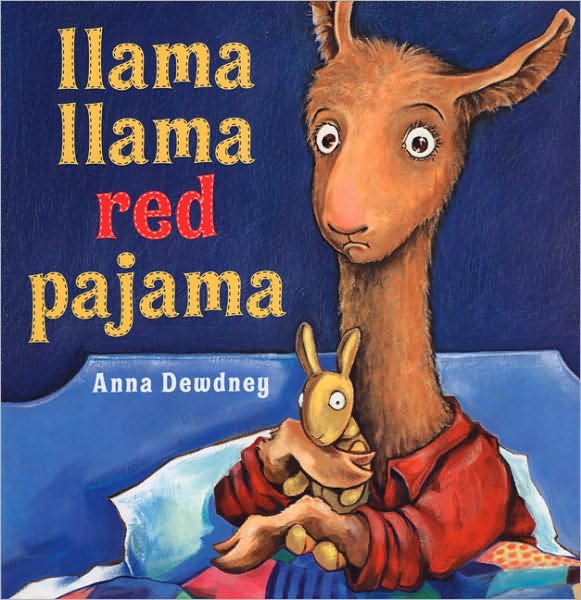
Book Review: llama llama red pajama by Anna Dewdney

Photo 1

llama llama red pajama is a well illustrated book with lots of rhyming! It is part of a series of books written by Anna Dewdney. The book goes through llama llama red pajama's bedtime routine with his mamma. He learns that his mamma is always near even if she isn't right there with him.

Photo 2


Activity to go along with this book:

Explore rhyming with your child starting with basic words. Try giving your child a word and seeing how many different words they can come up with that rhyme. If your child is older, see if they can write a poem or a story that rhymes. This is a great activity to help broaden your child's language skills.

Monday, May 6, 2013

Tips and Tricks for your Child's Seasonal Allergies


Spring Time


This time of year is beautiful in Utah but with that beauty there is often a price to pay; that price is allergies. Over the past 2 weeks I've been trying every trick in the book to help control my allergy symptoms. Runny nose, itchy eyes and sneezing has made an annoying few weeks for myself. I never had allergies as a kid but I remember my brother suffering from them every spring. He'd be sprawled out on the couch with a cold rag over his swollen eyes and constantly had a box of tissues with him. Because seasonal allergies can be annoying for you and your young kids, here are some helpful tips and tricks to prevent and control the symptoms.
Seasonal Allergies


  • Stay Inside. The best way to treat allergy symptoms is to avoid allergens to begin with. So when pollen counts soar, keep kids indoors as much as possible. Pollen is usually at its peak mid-morning, early evening, and when the wind is blowing.
  • Use Saltwater. Having a plugged-up nose can be one of the toughest symptoms for children with allergies. For relief, older children might want to try nasal irrigation with a saline solution. You can buy saline at the drugstore or make your own by mixing in a squirt bottle eight ounces of boiled water to one teaspoon non-iodized salt.
  • Stay Hydrated. All that sneezing and blowing can leave a child parched. Keep a water bottle full and close to hand and encourage your children to keep sipping.
  • Warm It Up. Steam from a warm shower or bath seems to offer allergy symptom relief for some so encourage kids to enjoy a little tub time. Just be careful to make sure the shower is not too hot.
  • Keep It Cool. To keep pollen out when the weather’s hot, air condition your car and home and keep windows closed.
  • Deal With Dry Air. A little moisture in the air makes breathing easier for most, so if the air in your house is dry, get a humidifier. But be careful: Humidity over 40% can encourage the growth of indoor allergens like mold and dust mites.
  • Go Cold. When itchy eyes are driving your kid crazy, try a cold compress, which may help reduce the itch and soreness.
  • Keep Your Hands to Yourself. Help kids to avoid rubbing their itchy eyes. Rubbing will only irritate them -- and could make the itchiness even worse.
  • Spice It Up. If your kids will eat spicy foods, a dish made with cayenne pepper, hot ginger, fenugreek, onions, or garlic may help thin mucus and clear nasal passages.
  • Use Top Tissues. When kids’ allergies are at their peak, tender noses can get sore pretty fast. Look for tissues with lotion or aloe..
  • Rub Jelly On It. And if your child’s nose is raw and red from blowing, you can soothe his sniffer with a dab of petroleum jelly.
  • Gargle to Relieve Sore Throats. If drainage leaves your child with a sore throat, gargling with warm salt water made of 1-2 Tablespoons of table salt in 8 ounces of water may ease the pain.
  • Drink Warm Tea. Drinking more fluids can also help sooth tender throats. Try a weak tea with honey and lemon. Bonus: The steam may relieve sinus congestion, too.
  • Get Face Time. Warm compresses applied to the face may also help soothe a child’s sinus pressure and pain.
  • Watch Out for Certain Foods. If your child is allergic to ragweed, he may also have an allergic sensitivity to some foods that may include bananas, melons, chamomile tea, sunflower seeds, and cucumbers.

  • (WebMD, Nov. 2012)

    Monday, April 29, 2013

    Books are the Key to Life Long Learning


    Shared Reading

    Shared reading involves either reading aloud to children or having older children read aloud to you and taking time to talk about the characters, plots and morals of the stories you have read. Jim Trelease, expert in child literacy said, "The single most important activity for building the knowledge required for eventual success in reading is reading aloud to children." Source

    Rhymers are Readers

    Research has shown that Nursery Rhymes are extremely important in a child's development. Experts in literacy and child development have seen that if children know eight nursery rhymes by heart by the time they're four years old, they're usually among the best readers by the time they're eight. [Fox, M. (2001). Reading Magic. San Diego, CA: Harcourt.] When children hear nursery rhymes, they hear the sounds that vowels and consonants make and learn how to put them together as well as practicing pitch, volume, voice inflection and rhythm of language. Since nursery rhymes are patterns, they help children learn easy recall and memorization. Children also develop their mouth and tongue muscles by using different sounds in rhymes. 

    Mother Goose Rhymes:
         Link 1
         Link 2

    Photo
    Activities and Ideas

    Make Predictions. As you read a story, ask your child what he or she thinks is going to happen next. After the story is over, ask you child if he or she can think of a different way the book could have ended. 

    Go on a reading campout. Build a tent in your living room or backyard. Ask your child to bring his or he favorite books and stuffed animals. Grab some flashlights and read together. 

    Find a recipe online or in a cookbook. Read the recipe out loud together and follow the instructions to cook something delicious. 

    When you open a new board game, read the instructions with your child. 

    Have a reading scavenger hunt. Choose a letter of the alphabet and talk about the sounds it makes. Go on a walk around your house or neighborhood and find as many things as you can that start with that letter.

    Make your own book. Using photographs and your child's drawings, make a picture book together. Write the words to the story and then read your book together.

    Put on a puppet show. Choose one of your child's favorite books and read it together. Then make puppets out of socks or brown lunch bags. Act out the story for family or friends.

    Pause as you are reading a book to talk about how the characters may be feeling or what they could be thinking.

    Let children pick their own books. Don't worry if they choose the same one over and over. It takes an adult six times to recognize a word; it takes even longer for an infant or toddler.

    For babies to toddlers use facial and vocal expression as you talk and play with your child. When repeating rhymes or fingerplays, let children act them out as you say them.

    For toddlers, 2-4 years old, help them use all of their senses during an activity. For example, if you go for a walk, have them listen to the sounds outside and feel different objects. Ask them open-ended questions about what they are seeing and feeling. When reading rhyming books, pause to let the child finish the word and tell the story.

    When your children are older (4-5) let them hold items and be in charge of activities. Use different materials, such as dress-up clothes, puppets, and pictures to retell a child's favorite stories.


    These ideas and activities are available HERE

    Wednesday, April 24, 2013

    Block Play: The Foundation of Science and Math

    Child Development and Block Play

    Block play provides an opportunity for building spatial math skills for children. Counting, equality, addition, subtraction, planning, patterns, volume, classification, area and measurement will be learned. When a parent engages with their child in block play if provides teaching moments for social skills, language and exploration.

    Photo

    Activities and Ideas

    Make your own blocks
    Gather standard boxes (milk cartons, capri sun, etc.) and cover them with wrapping paper or contact paper. Allow your child to guide the activity and discuss the sizes as you create the blocks.

    Invest in a good set of unit blocks
    Get sturdy, hardy blocks that will last a very long time. Having a designated shelf or spot for the blocks so your child will know their spot and where to clean them up.

    Create your home
    Go on a walk and point out the different houses in your neighborhood. After sit with your child and talk about the structure of your home and build it with blocks.

    How many blocks high am I?
    Put block in a basket and stand up a doll or stuffed animal so children can see it. Ask them, "How many blocks tall is the doll (from her head to her toes)?" Ask your child to remove from the basket the number of blocks he/she thinks the doll is tall. Lay the doll on the floor and lay the blocks next to it to check their guesses. Ask the child to add or subtract blocks to adjust to the height of the doll. You can also do this with your child's height.

    The Chain Reaction
    With your child, set blocks on end in line, one after the other. Space the blocks like dominos for the effect if one block is moved that it creates a chain reaction. After, ask your child to predict what will happen when the first block is pushed.

    Roads, Train Tracks, and Tunnels
    Give your child blocks and assist in creating roads, train tracks for mini cars/trains. Cut round boxes in half to create tunnels.

    Knock 'Em Down
    Use margarine tub containers, and have your child stack them and know them down. Kids loce the drama and repetition of this activity.

    Name it
    Ask your child to write their initials or first name using alphabet blocks instead of paper and pencil. Stretch it out across the whole room.

    Block Maze
    If you have a small animal (hamster, etc.) have your child build a block maze, house that they can run around in.

    Stuffed Animal Homes
    Have your child build a block home(s) to fit their variety of stuffed animals.

    Ramp it
    Help your child create a variety of ramps. Roll small balls down the ramp.

    Mirror Images
    Get a table-top three-way mirror. Encourage your child to build with small blocks in front of the the mirror. Children learn the concept of reflection and can use it to build their block design.

    Making Patterns
    Give your child a variety of colored blocks with different shapes. Create a pattern for your children to mimic.

    I Spy a Block
    Place a variety of blacks on the floor. Encourage your child to describe the blocks. Use characteristics that help your child to focus on the shape, color, or size. Example: "I spy a triangle block. Where is it?"

    Source

    Tuesday, April 23, 2013

    Resource Spotlight: Safe Sleep Practices

    Safe Sleep Practices

    Photo


    An article found at healthychildren.org from the American Academy of Pediatrics names the "2 Most Important Things To Remember About Safe Sleep Practices"


    1. Healthy babies are safest when  sleeping on their backs  at  nighttime and during naps. Side sleeping is not as safe as back sleeping and is not advised.

       2. Tummy time is for babies who are awake and being watched. Your baby needs this to develop strong muscles. 

    Remember ....Back to Sleep. Tummy to Play.

    To learn simple baby sleep solutions go here


    Wednesday, April 17, 2013

    Playgroup: Playing with Balls - Activity Ideas

    Child Development and Ball Play:

    Balls bounce, roll, soar, and move. The dynamics of moving balls will help your child learn principles of physics and cause and effect.

    Photo
    Activities and Ideas:

    One-Handed, Blind-Folded Cotton Ball Transfer: Players blindfold themselves by using a spoon held with one hand. The objective is to transfer the most cotton balls in 30 seconds from the bowl to the plate. 

    Playing Catch: Use a variety of balls and try these activities:
    -Drop a ball, let it bounce and then catch it.
    -Throw a ball up high and catch it.
    -Throw a ball high in the air and try to clap as many times before you catch it.
    -Throw a ball against a wall and catch it.
    -With a friend, throw a ball back and forth.

    Home Bowling: There can be 2, 4 or 6 players. Divide the kids into two teams and set up each group at a distance on either side of at least five empty two-liter soda bottles. Each team should have at least 3 balls. Each team takes a turn trying to knock down the bottles by rolling the balls into them as quickly as possible. The team first to knock all the bottles down wins. Milk cartons, empty oatmeal containers, empty cans also work for this activity. 

    PIG: 3-6 players. Have the kids stand in a circle and throw the ball back and forth in no specific order between players. All players need to be a alert while playing because they will gain on letter of the word PIG every time they fail to catch the ball. When a child collects all three letters he is out. The last player remaining in the game wins. 

    Monkey in the Middle: Someone is chosen to be the "monkey" be in the middle of the circle that is formed by all the players. A ball will be passed around in the circle, the person in the middle will attempt to intercept the ball. When this happens, the person in the circle who last touched the ball becomes the "monkey".

    Foursquare: On a concrete slab, divide a 6 feet wide section into a square then into four small  equal-sized squares inside. Number each square with one child on each number (1-4). The child in square 1 begins by bouncing the ball to a different square without hitting the lines. The child in that square must hit the ball into another child's square without bouncing it twice and so on. A child who doesn't hit the ball into the appropriate square or hit the ball before it bounces the second time is out. All children rotate up a number. The objective is to reach square one and hold that position.

    The Rhyming Ball Game: Have all players sit in a circle. Hold a ball, say a word then roll it to the next person. The player receiving the ball chooses a word that rhymes with the previous word. Everyone takes turns choosing the first word and the rhyming word. 

    Ball Bounce: Have each player hold and stretch the edges of a parachute or large sheet. Place a ball in the center. Demonstrate how to flap the parachute while bouncing the ball. Count out loud to keep track of how long the children can keep the ball going without it bouncing off the parachute. To make the game more challenging add more balls!

    Name Ball: Have players stand making a large circle. A player will start by saying his name then gently passes a small ball that is easy to grip to the child on the left or right of them. The child receiving the ball must same their name as they're catching the ball. The process continues until every player has said their name. Next round have each player say the name of the child right or left of them when they catch the ball. You can change up the game by speeding up or using more players. 

    Source: Help Me Grow of United Way

    Tuesday, April 16, 2013

    "Play is a Child's Work"

    Photo
    Types of Play

    Unoccupied Play: The infant is usually stationary, making random movements and no apparent purpose.

    Solitary Play: The child (usually 2 - 3 years) is focused on their play, not noticing others. 

    Onlooker Play: The child will show interest in other children's play through observation, but may not become involved in the play. They'll learn and apply what they've seen later in their own play. It is most often a younger child observing an older child.

    Parallel Play: Children (infants to preschool age) playing side-by-side with the same types of toys or activity, but not together. 

    Independent Play: This is playing with just yourself. This type of play teaches children to be independent and emotionally satisfied. It's important for all children of all ages to learn independent play. 

    Associative Play: This involves more social interaction rather then the use of a toy, for example, pipe cleaners become swords. It's common that one child directs the play of the group.

    Cooperative Play: This play involves team work and organizational skills to accomplish a goal or task.

    Photo
    Benefits of Play
    • Encourages the use of imagination
    • Develop dexterity
    • Develop physical, cognitive, and emotional strength
    • Create and explore
    • Learn to work in groups, to share, to negotiate, to resolve conflicts and to learn self-advocacy skills.
    • Practice decision-making skills
    • Learn leadership skills
    • Encourages physical activity
    • Social interaction: build enduring relationships
    • Learn communication skills
    • Adjust easier to school
    • Learn readiness
    • Learn problem-solving skills


    Sources: 
    Parten, M. (1993). Social play among preschool children. 
    Journal of Abnormal and Social Psychology, 28, 136-147.
    American Academy of Pediatrics link

    Monday, April 15, 2013

    Baby Sleep Suggestions


    Snooze Strategies A to Zzz

    Photo

    Avoid  Eye Contact: Lasting, animated eye contact is stimulating and can prolong getting a baby to sleep.

    Bath-time: Warm water & soft washcloth strokes will likely calm and relax a baby.

    Co-sleeping: Babies who co-sleep with their parents develop higher self-esteem & have less anxiety.

    Dreamfeed: By feeding a sleeping baby before mom  goes to bed, may buy interrupted sleep.

    Empty the Crib: Items in the crib (blankets, toys) can be a potential hazard & cause choking or suffocation.

    Fragrance: Essential oils (lavender) has relaxing & anti-anxiety benefits.

    GERD: Gastroesophageal reflux disease is known to disturb babies sleep.

    Hands-on: When lying a baby in the crib, gentle touches on the head, arms & tummy to soothe her.

    Ideal Bedtime: Setting a sleep schedule is important and helps to avoid over tiredness.

    Jammies: Pick jammies that fit  snugly & is made of natural fibers to avoid skin irritation.

    Keeping Cool: It’s recommended to keep a baby’s room at 70 degrees Fahrenheit.

    Lights Out: Create a dark environment for baby to sleep in. Avoid nightlights.

    Massage: Babies and toddlers who get a short massage before bedtime fall asleep quicker than those read to.

    Naps: Are important for a baby’s mental & physical growth and they’ll sleep longer if they nap regularly.

    Overnight: Night diapers and diaper cream will make it more comfortable for  baby and hopefully asleep!

    Pacifiers: Are a great object to use to help baby soothe themselves to sleep.

    Quirky Fixes: Be flexible and willing to try different things to soothe baby, i.e. driving around the neighborhood.

    Routines: Choose a bedtime ritual for baby and stick with it. Consistency is key!

    Swaddling: “Baby burrito” will save you.  This technique mimics the tight womb and will naturally calm baby.

    Telling a Story: Before bed reading or telling a story can be relaxing for you both and be a great time to bond.

    Understanding Cues: Watch for baby’s cues and you’ll eventually understand when she's ready for bed.

    Voice: Newborns by now know mom’s voice. Speak softly and baby will naturally drift off to sleep feeling safe mom is close by.

    White Noise: In the womb there was constant, loud noises. Baby may sleep easier with a fan or white noise machine.

    XOXO: Longer and deeper sleep is a result of loves and kisses.

    You are my Sunshine: Singing is a soothing technique to calm  sleepy baby.

    Zzz: What is that sound? A sleeping baby!